Full Basement Waterproofing in Seattle, WA
Full basement waterproofing in Seattle, WA usually means an interior drain feeding a sump, an exterior membrane, or both. One short request on this free referral service goes to a single independent local contractor, who gets in touch, visits and writes up options with a price.
Not sure if we cover your area? Check now ↓
Basement Estimate Request
Takes about 30 seconds. One local contractor gets it and contacts you.
Your details go to one independent contractor who works around Seattle, WA, and that contractor gets in touch with you directly. See our Referral Marketing Disclosure.
The Main Ways to Waterproof
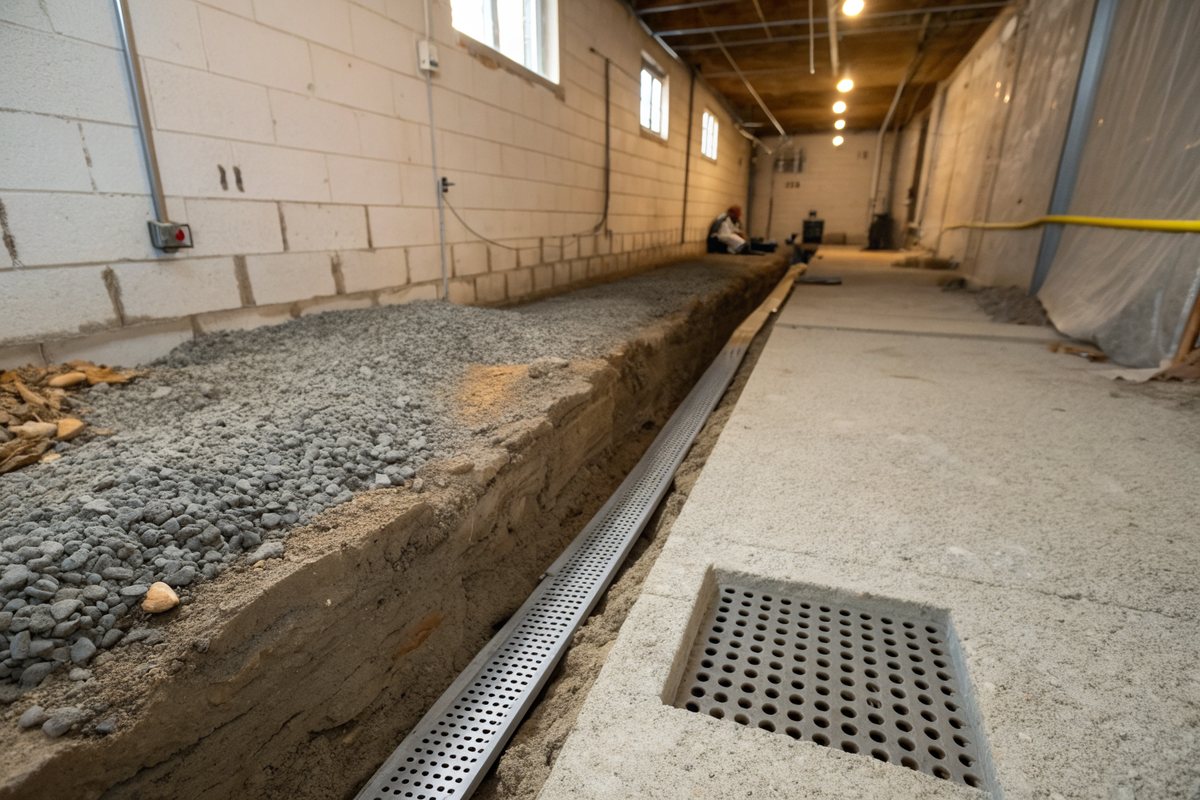
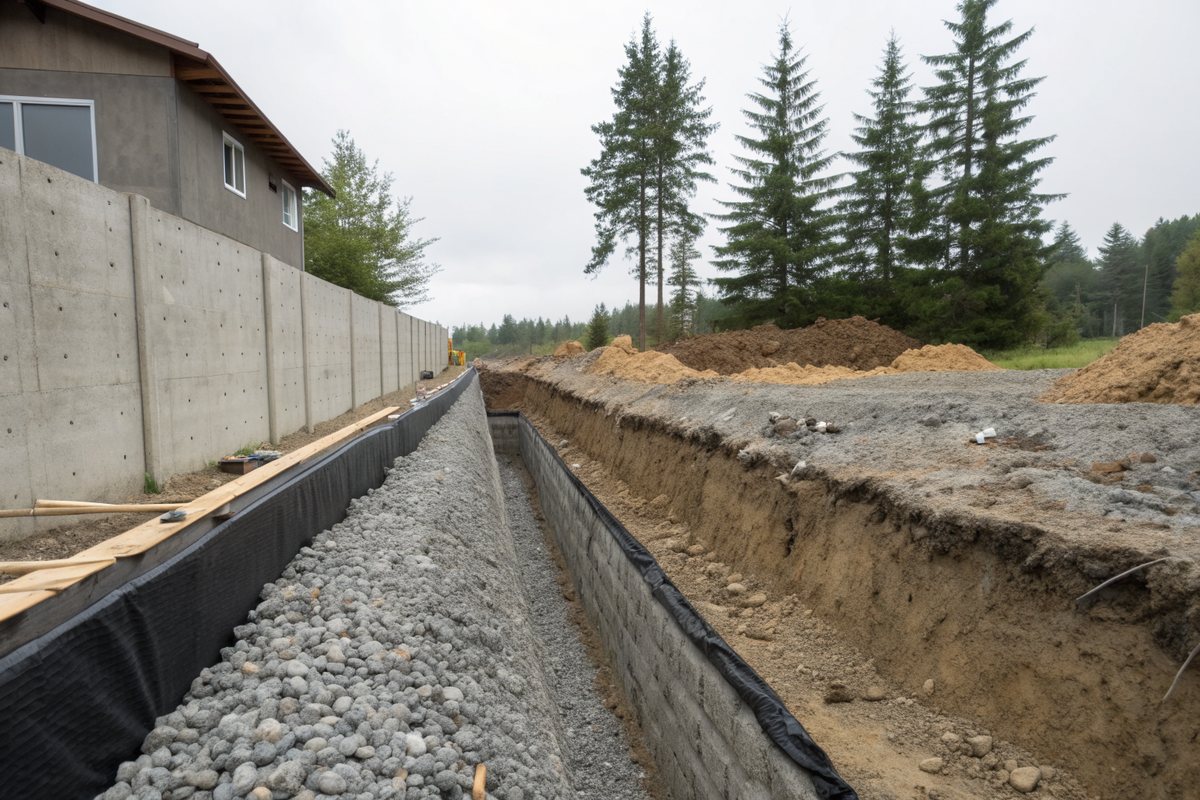
There are two broad routes. An interior system lays perforated pipe in gravel along a channel cut at the edge of the slab, pitched toward a pit where a pump lifts water out. An exterior approach digs to the footing and coats the wall's outer face with a membrane, often adding a footing drain. Interior work spares the garden; exterior work keeps water off the concrete.
Wall type shapes the choice. Poured concrete admits water at cracks, tie holes and the wall-slab seam, while block can fill its hollow cores and weep at mortar lines. Seattle has plenty of older walls: more than a fifth of homes date from 1939 or earlier (Census survey), many from the Craftsman boom after the 1909 Alaska-Yukon-Pacific Exposition.
The ground matters too. Dense glacial till caps ridges such as Magnolia and Phinney Ridge over layers of sand and clay, and groundwater tends to travel along the boundaries between them (City of Seattle environmentally critical areas science review). Daylight basements on hillside lots can meet that water first on the buried uphill wall.
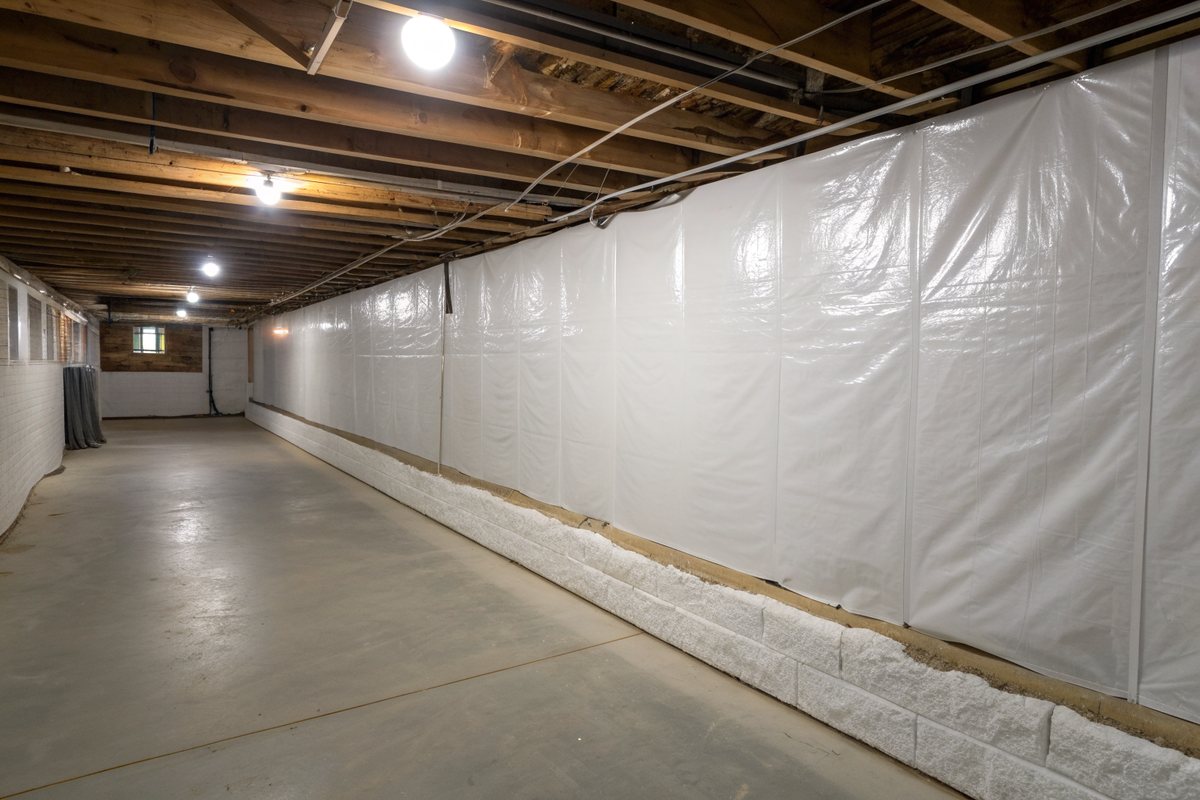
Paint alone rarely holds back water under pressure; it blisters as moisture collects behind it. For walls that are only damp through the October-to-March rainy season, a vapor barrier and a properly sized dehumidifier can keep musty air in check.
The Usual Scenarios
- Water creeping along the floor edge. An interior perimeter drain and sump give it a way out.
- A wall that stays wet after storms. An exterior membrane, where the yard leaves room to dig.
- A daylight basement on a slope. The buried uphill side often needs the most attention.
- Clammy air, little standing water. A vapor barrier and dehumidifier may be enough.
- Roof water landing by the foundation. Clean gutters, longer downspouts and soil sloping outward come before anything bigger.
Costs to Expect
| Cost row | Figure | Source (year) |
|---|---|---|
| Typical basement waterproofing project | about $3,000 to $10,000 (average about $5,000) | Fixr national (2026) |
| Interior perimeter drain, per linear foot | $40 to $120 | Fixr national (2026) |
| Sump pump installation | $600 to $2,500 | Fixr national (2026) |
| Epoxy crack injection, per crack | $250 to $1,000 | Fixr national (2026) |
| Waterproof paint or sealant, per sq ft | $1 to $8 | Fixr national (2026) |
These are Fixr's 2026 national ranges, not figures set by this site, and Seattle labor runs high. Interior systems combine the drain and pump rows; exterior digging has no sourced figure, so ask for it as its own line. The cost calculator turns basement size into a rough range.
From First Visit to Finished Job
- First contact. The contractor reaches out to arrange a visit.
- Walls and yard. Expect questions about when water shows up and a look at gutters, downspouts and grading.
- A written contract. It lists the scope, drain length, pump model, discharge point, price, payment schedule and warranty terms, including whether they transfer.
- Permits. The contractor confirms permits with the Seattle Department of Construction and Inspections (SDCI), help line (206) 684-8850. Tying a sump into drain lines is plumbing, for a licensed plumbing contractor with a permit.
- Paying in stages. Pay as phases finish, and get lien releases from major subcontractors and suppliers before the last payment.
Why Request It Here
One form reaches one independent contractor, so there is a single conversation, not a string of sales pitches. This free referral service is not a contractor, is not registered with Washington L&I as one, does no basement work and signs nothing. Contractors may advertise here, currently on a free trial; homeowners never pay and are never handed anything. Before signing, look up the contractor's registration, bond, insurance and any citations with L&I's Verify a Contractor tool or at 1-800-647-0982.
- Pressure to sign today. A fair price survives a night's thought.
- The full amount up front. Tie each payment to a finished phase instead.
- A warranty that is only spoken. Get the terms on paper.
Quick Answers
Is an interior drain or an exterior membrane better for a Seattle house?
Neither wins everywhere. Interior systems avoid tearing up gardens, retaining walls and steep side yards, so they are common on hillside lots. Exterior membranes keep water off the wall itself and suit open yards. Ask the contractor to set out the trade-offs in writing.
Will waterproof paint fix a wet wall?
Usually not when water is actively coming through. Paints and sealants handle light dampness, but water driven by saturated soil gets behind them and they can bubble or flake. They work best as a finishing layer over working drainage.
Do I need a permit for basement waterproofing in Seattle?
It depends on the job. SDCI says most projects need a permit, and steep-slope lots get extra review. Whether an interior drain alone needs one varies, so the contractor confirms with SDCI. Plumbing permits come from Public Health – Seattle & King County instead.
Where should the pump send the water?
Somewhere it cannot drift back toward the foundation. Never send it into a household drain or the sewer without asking first: connecting a sump to drain lines is work for a licensed plumbing contractor with a permit.
Other Problems, Other Fixes
Water from one spot points to basement leak repair or foundation crack repair, while the parts of a full system get their own pages on sump pump installation and basement drainage.
Request a Waterproofing Estimate
Use the form to note which walls get wet and whether it follows long soaking rains. One independent local contractor will get in touch about a visit and a written estimate; going ahead is your decision.